- Blog
- |
- 16 Oct 2025
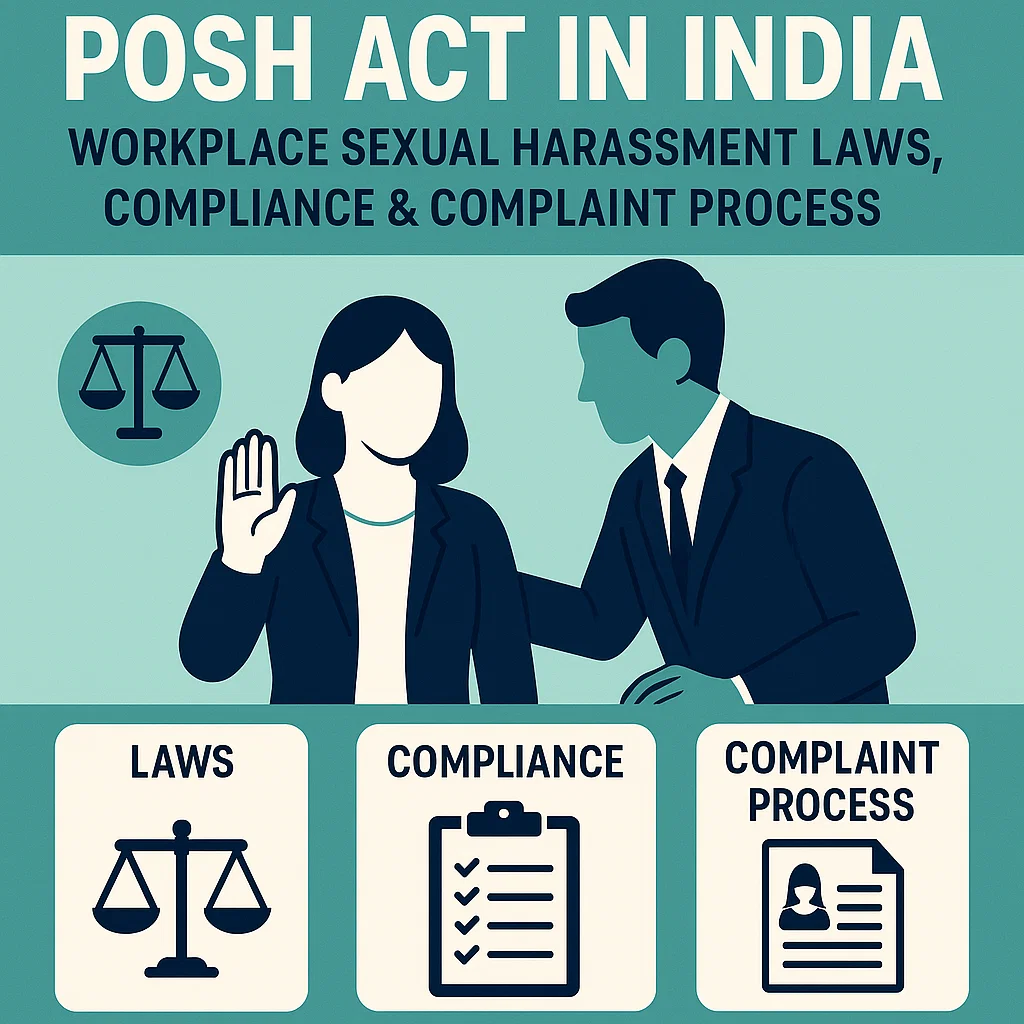
POSH Act in India: Workplace Sexual Harassment Laws, Compliance & Complaint Process.
The Sexual Harassment of Women at Workplace (Prevention, Prohibition and Redressal) Act, 2013, widely known as the POSH Act, is a significant piece of legislation in India aimed at protecting women from sexual harassment at their place of work. This law was enacted to provide a legal framework that ensures women can work in a safe and respectful environment without fear of harassment. Prior to the enactment of the POSH Act, there was no specific law in India addressing workplace sexual harassment. Although the Supreme Court had issued guidelines in the famous Vishaka case of 1997, those guidelines were not legally binding. Therefore, the POSH Act was introduced to create a statutory mechanism to prevent sexual harassment, provide redressal for complaints, and promote awareness among employers and employees.
The Act protects all women who work in any capacity, whether they are permanent employees, temporary workers, contractual staff, interns, trainees, or even clients and customers visiting the workplace. It applies to workplaces of all kinds, including offices, factories, hospitals, educational institutions, and even informal sectors like domestic work. This broad scope ensures that the rights of women are protected regardless of the nature or size of the workplace.
Sexual harassment under the POSH Act is defined as any unwelcome act or behavior that is sexual in nature and causes offense or humiliation to the woman. This includes physical contact such as touching or brushing against someone inappropriately, making sexual advances or demands for sexual favors, verbal remarks like sexually suggestive comments or jokes, and non-verbal actions like displaying pornographic material. Sexual harassment can also involve creating a hostile or intimidating environment that makes it difficult for a woman to perform her work. The Act covers two main types of sexual harassment: “quid pro quo” harassment, where employment benefits are linked to submission to sexual advances, and “hostile work environment” harassment, where the workplace atmosphere is offensive or intimidating.
One of the key features of the POSH Act is the mandatory creation of an Internal Complaints Committee (ICC) in every organization with ten or more employees. The ICC is responsible for receiving complaints, conducting inquiries, and recommending appropriate actions. The committee must consist of at least four members: a woman presiding officer, preferably someone senior or with legal or social work experience; two employees from the workplace; and one external member from outside the organization who is familiar with the issues of sexual harassment. The external member helps ensure impartiality and fairness during the inquiry process. The ICC must also maintain confidentiality and sensitivity while handling complaints.
For workplaces with fewer than ten employees, or in cases where an ICC cannot be formed, the Act provides for a Local Complaints Committee (LCC) at the district level. This committee performs the same functions as the ICC and ensures that all women, regardless of where they work, have access to a proper complaint mechanism.
The Act also lays down a clear procedure for filing complaints and conducting inquiries. A woman must file a complaint within three months of the incident, though this period may be extended by another three months for valid reasons. The ICC or LCC is required to complete the inquiry within ninety days and submit a report to the employer or relevant authority within ten days after completing the inquiry. Based on the report, the employer must take action within sixty days. These timelines are intended to prevent delays, which often discourage women from seeking justice.
Confidentiality is a vital aspect of the POSH Act. The identity of the complainant, the respondent (the person accused), and witnesses, as well as the details of the complaint and inquiry, must be kept strictly confidential. This protects the privacy and dignity of all parties involved and prevents any retaliation or victimization.
The POSH Act makes employers responsible for creating a safe workplace. Employers must have a written policy against sexual harassment, constitute an ICC, conduct regular training and awareness programs, and submit annual reports to the district authorities regarding complaints and their outcomes. Failure to comply with the Act can result in penalties, including fines up to ₹50,000. Repeated violations may lead to harsher penalties such as higher fines or cancellation of business licenses.
In addition to addressing complaints, the Act focuses on prevention. Organizations are encouraged to conduct sensitization programs and workshops to educate employees about what constitutes sexual harassment and how to respond if they witness or experience it. This helps foster a culture of respect and safety.
Definition of sexual harassment
The POSH Act contains important definitions that help us understand what exactly it covers and how it works. These definitions are the foundation of the law and explain key terms related to workplace sexual harassment.
Sexual Harassment (Section 2(n) of the Act.)
The Act defines sexual harassment as any unwelcome behavior of a sexual nature that can hurt or embarrass a woman at work. This behavior can be physical, verbal, or non-verbal. For example, unwanted touching, making inappropriate comments or jokes, asking for sexual favors, or showing offensive pictures or messages. The behavior can also include creating a hostile work environment where a woman feels unsafe or uncomfortable. This broad definition helps cover many different types of harassment, not just obvious or physical ones.
Workplace Section 2(o) of the Act.
The term workplace means any place where a woman works or visits as part of her job. This includes offices, factories, shops, hospitals, educational institutions, and even places like transportation used for work-related travel. The law covers both organized workplaces and informal ones like domestic work. ensures that women are protected no matter what kind of workplace they are in.
Aggrieved Woman Section 2(a).
This term means any woman who alleges she has faced sexual harassment. It includes women who work full-time, part-time, or even temporarily. The Act uses this term to make sure that all women workers, no matter their status, are protected.
Respondent Section 2(o).
The respondent is the person who the complaint is made against. This can be a co-worker, supervisor, employer, or anyone at the workplace accused of sexual harassment. The respondent has the right to a fair inquiry under the Act.
Internal Complaints Committee (ICC) ( Section 4)
The ICC is a committee that every organization with 10 or more employees must create to handle complaints of sexual harassment. It includes a senior woman officer, two other employees, and one external member from outside the organization who understands the issue of harassment. The ICC investigates complaints and recommends action.
Local Complaints Committee (LCC) (Section 6)
In workplaces with fewer than 10 employees or when there is no ICC, the district-level Local Complaints Committee handles complaints. The LCC ensures that women working in small or informal workplaces also have access to justice.
The POSH Act includes several important provisions to make sure the law is effective:
Filing Complaints (Section 9): A woman must file a complaint within three months of the incident. This can be extended to six months if there is a valid reason. The complaint is submitted to the ICC or LCC.
Inquiry Process (Section 11): Once a complaint is received, the committee must complete the inquiry within 90 days. Both the complainant and respondent have the right to present evidence and witnesses. The inquiry should be fair, impartial, and confidential.
Action and Penalties (Section 13 & 14): Based on the committee’s report, the employer must take appropriate action against the respondent. This can include warnings, suspension, or even termination. The Act also penalizes employers who do not comply with the law, including fines.
Confidentiality (Section 16): All details related to the complaint and inquiry must be kept confidential. This protects the privacy of everyone involved and prevents victimization.
Employer’s Duties (Section 19): Employers must create a written policy against sexual harassment, organize training for employees, and report yearly on complaints and action taken.
Compliance Requirements Under the POSH Act
The POSH Act not only defines sexual harassment and provides mechanisms for complaint redressal but also imposes clear compliance responsibilities on employers to ensure a safe and harassment-free workplace. Compliance means following the rules and procedures laid out by the law to prevent sexual harassment and to respond appropriately if any incident occurs.
Mandatory Internal Complaints Committee (ICC)
One of the most important compliance requirements under the POSH Act is that every employer with ten or more employees must constitute an Internal Complaints Committee (ICC). The ICC acts as the primary body within the organization to receive complaints, conduct inquiries, and recommend actions. The formation of the ICC is not optional; it is a legal obligation. Failure to form this committee can lead to penalties and fines.
The committee must be carefully constituted to maintain fairness and sensitivity. It should include:
A woman as the presiding officer, preferably in a senior or managerial position, or someone experienced in dealing with issues related to sexual harassment.
At least two members from the organization, preferably women, who understand the workplace dynamics.
One external member from an NGO, an association committed to women’s rights, or a person familiar with social or legal issues related to sexual harassment.
Having an external member helps maintain neutrality and impartiality during investigations. The ICC members should be trained to handle complaints respectfully and confidentially.
Local Complaints Committee (LCC)
For employers with fewer than ten employees, or when the complaint is against the employer or the ICC itself, the POSH Act mandates the formation of a Local Complaints Committee at the district level. This ensures that even women in small workplaces or informal sectors can access a fair complaint process.
Written Policy Against Sexual HarassmentEmployers are required to develop and display a written policy clearly stating that sexual harassment will not be tolerated in the workplace. This policy must describe:
What constitutes sexual harassment,
The process for filing complaints,
The role and constitution of the ICC,
The rights of the complainant and the respondent,
The steps the organization will take to investigate and resolve complaints.
Displaying this policy in a visible place ensures that all employees know their rights and the procedures available.
Awareness and Training Programs
Compliance also involves regularly organizing training and awareness programs for all employees. These programs aim to educate staff about the importance of a respectful workplace and the consequences of sexual harassment. They explain how to recognize harassment, how to report it, and the protections available under the law.
The training helps change workplace culture by encouraging employees to speak up and by promoting zero tolerance for harassment.
Complaint Handling Procedure
Employers must ensure the ICC follows the complaint handling procedure as prescribed by the Act:
Complaints should be addressed promptly and confidentially.
The inquiry should be completed within 90 days.
Both the complainant and respondent have the right to be heard and present evidence.
After the inquiry, a report must be submitted within 10 days.
Appropriate action must be taken within 60 days based on the findings.
The employer should also protect the complainant from retaliation or victimization during and after the complaint process.
Annual Reporting
Another critical compliance requirement is that every organization must submit an annual report to the district officer detailing the number of complaints received, actions taken, and preventive measures implemented. This report helps the government monitor compliance and evaluate the effectiveness of the law.
Penalties for Non-Compliance
The POSH Act is strict about enforcement. Employers who do not comply with its provisions can be fined up to ₹50,000 initially. If the employer continues to ignore the law, the fines can increase, and they may face consequences such as cancellation of business licenses or permits. This penalty structure motivates organizations to take their responsibilities seriously.
Role of Employers Beyond Compliance
Employers must foster a workplace culture where women feel safe and respected. Compliance is not just about meeting legal requirements but about creating an environment where sexual harassment is not tolerated in any form. This involves active leadership, clear communication, and genuine commitment to equality and dignity.
Complaint Mechanism and Redressal Process Under the POSH Act
A crucial part of the POSH Act is the establishment of a clear and effective complaint mechanism that enables women to report incidents of sexual harassment safely and ensures that complaints are addressed fairly and promptly. This complaint and redressal process is designed to protect the rights of the complainant while also ensuring a fair inquiry for the accused.
Filing a Complaint
Under the POSH Act, any woman who believes she has been sexually harassed at her workplace is known as the “aggrieved woman.” She can file a complaint in writing to the Internal Complaints Committee (ICC) if her workplace has one. If the workplace has fewer than 10 employees or does not have an ICC, the complaint can be submitted to the Local Complaints Committee (LCC) at the district level.
The complaint must be filed within three months of the incident. However, if the woman can show valid reasons for delay such as fear, trauma, or lack of awareness this period can be extended up to six months. This timeframe encourages timely reporting but also allows flexibility in genuine cases where women may hesitate to come forward immediately.
Contents of the Complaint
The complaint should clearly describe the incident(s) of harassment with as much detail as possible, including dates, times, places, names of witnesses (if any), and the nature of the harassment. This helps the committee understand the case and carry out a thorough inquiry. However, if the woman is unable to put her complaint in writing, the committee or an authorized person should assist her in documenting it.
Inquiry Process
Once a complaint is received, the ICC or LCC is required to conduct a detailed inquiry in a confidential and unbiased manner. The inquiry should be completed within 90 days to avoid undue delays.
During the inquiry:
Both the complainant and the respondent (the person accused) have the right to present their evidence, call witnesses, and be heard.
The inquiry must be conducted sensitively to protect the dignity and privacy of the woman.
The committee should avoid any conflicts of interest and maintain impartiality throughout the process.
The identities of all parties and the details of the complaint must be kept confidential to prevent retaliation or social stigma.
After completing the inquiry, the committee prepares a report within 10 days and submits it to the employer or relevant authority.
lowchart: Complaint Mechanism and Redressal Process under POSH Act
Incident of Sexual Harassment Occurs
Filing Complaint (Section 9)
Aggrieved woman files a written complaint to:
Internal Complaints Committee (ICC) if workplace has ≥10 employees
Local Complaints Committee (LCC) if workplace has <10 employees or no ICC
Complaint must be filed within 3 months (extendable to 6 months for valid reasons)
Assistance in Filing Complaint (Section 9(3))
If complainant unable to write complaint, ICC/LCC assists in writing
Inquiry Process (Section 11)
ICC/LCC conducts inquiry within 90 days
Both complainant and respondent have right to present evidence and witnesses
Inquiry is confidential and impartial
Interim Relief (Section 12)
During inquiry, ICC/LCC may recommend:
Transfer of complainant or respondent
Granting leave to complainant
Counseling
Inquiry Report Submission (Section 11(9))
Report submitted within 10 days of inquiry completion
Employer Action (Section 13)
Employer must act on committee’s recommendations within 60 days
Actions may include warnings, suspension, termination, etc.
Outcome
Complaint is found:
Substantiated → action taken against respondent
Unsubstantiated → no action
Malicious/False → possible action against complainant
Confidentiality (Section 16)
All proceedings and identities kept confidential
Protection Against Retaliation (Section 16)
Complainant, witnesses, and committee members protected from victimization or retaliation
Alternative Recourse
Complaint against employer or ICC → can be made to District Officer or Police (Section 7 & 8)
Outcomes and Recommendations
Based on the findings, the committee may conclude that the complaint is either:
Substantiated (harassment has occurred),
Unsubstantiated (harassment has not occurred), or
Malicious/false (complaint was made with ill intent).
If the complaint is substantiated, the committee recommends appropriate action against the respondent. This action can range from a written warning, counseling, transfer, suspension, or termination of employment, depending on the severity of the harassment.
If the complaint is found to be malicious or false, the complainant may also face disciplinary action, but the Act advises caution to ensure that genuine complaints are not discouraged.
Action by Employer
The employer is legally bound to act on the committee’s recommendations within 60 days. Failure to do so can attract penalties. The employer must also ensure the complainant is not victimized or discriminated against during and after the complaint process.
Interim Relief
During the inquiry, the ICC or LCC can recommend interim relief measures to protect the complainant. These may include transferring the complainant or the respondent to a different department, granting leave to the complainant, or providing counseling services.
Alternative Complaint Options
If a woman is unable to file a complaint with the ICC or LCC, or if the complaint is against the employer or the ICC itself, she can approach the district officer or the police. The Act encourages the use of internal mechanisms but does not prevent women from seeking help from other legal authorities.
Confidentiality and Non-Retaliation
Maintaining confidentiality is a vital part of the process to protect the reputations and privacy of all involved. The Act also prohibits retaliation against the complainant, witnesses, or committee members. Retaliation can include threats, intimidation, or any adverse action taken because someone reported harassment.
Landmark Supreme Court Cases Related to the POSH Act
Vishaka vs. State of Rajasthan (1997)
Facts:
The Vishaka case arose out of a disturbing incident in Rajasthan, where Bhanwari Devi, a social worker, was gang-raped. Bhanwari had been working to prevent child marriages in her village, which created tension with some influential people. After the assault, it became clear that there was no clear legal protection for women against sexual harassment or violence at the workplace or during official duties. The victim approached the Supreme Court seeking justice and guidelines to prevent such incidents.
At that time, India did not have any law specifically addressing sexual harassment at the workplace. Women subjected to harassment or abuse had to rely on general provisions of the Indian Penal Code or other laws that were inadequate to deal with the specific issues of workplace harassment.
Decision:
The Supreme Court delivered a historic judgment in 1997. It recognized that sexual harassment at the workplace violates fundamental rights guaranteed by the Constitution, particularly:
Article 14: Right to Equality before the law
Article 19(1)(g): Right to practice any profession or to carry on any occupation, trade, or business
Article 21: Right to Life and Personal Liberty (which the Court interpreted as including the right to live with dignity)
The Court acknowledged the absence of legislation on the subject and hence, stepped in to fill the gap by issuing binding guidelines, later known as the Vishaka Guidelines. These guidelines became the law of the land until the POSH Act was enacted in 2013.
The Vishaka Guidelines prescribed several measures:
Employers must take proactive steps to prevent sexual harassment.
The formation of Internal Complaints Committees (ICC) in workplaces.
Procedures for filing complaints and conducting inquiries.
Steps to ensure confidentiality and protection against victimization.
Awareness and sensitization programs for employees.
The Court defined sexual harassment broadly, including physical contact, advances, sexually colored remarks, showing pornography, or any other unwelcome physical, verbal, or non-verbal conduct of a sexual nature. This judgment was path-breaking as it recognized sexual harassment as a human rights violation and imposed a positive duty on employers to create safe workplaces.
Impact:
Vishaka became the foundation for all future laws related to workplace sexual harassment in India. It created awareness, gave legal recognition to women’s right to a safe workplace, and placed responsibility on employers. The guidelines also ensured that sexual harassment was treated not merely as a criminal matter but as a violation of fundamental rights
Rupan Deol Bajaj vs. KPS Gill (1995)
Facts:
This case involved Rupan Deol Bajaj, an Indian Administrative Service officer, who accused KPS Gill, then the Director-General of Police of Punjab, of sexually harassing her during a social function. The complaint detailed that Gill made unwelcome sexual advances and remarks, humiliating Bajaj publicly. Bajaj filed a complaint against him, bringing the issue of workplace sexual harassment into the public and judicial spotlight.
At that time, the concept of sexual harassment as a legal issue was not well-defined in India, and this case challenged that gap.
Decision:
The Supreme Court ruled in favor of Bajaj, recognizing that sexual harassment at the workplace is a serious violation of fundamental rights, specifically Articles 14 and 21. The Court acknowledged that sexual harassment not only humiliates the woman but also affects her dignity and her ability to work with confidence and freedom.
Key points from the judgment included:
Sexual harassment constitutes discrimination and assault.
Victims deserve protection, and complaints should be taken seriously by employers and authorities.
The workplace must be safe, and any harassment can have lasting negative effects on the victim’s career and mental health.
Employers have a responsibility to prevent and address such behavior.
The Court ordered that such behavior should not be tolerated and that offenders should be held accountable. This was one of the earliest cases to recognize sexual harassment as a violation of constitutional rights, setting important legal precedent.
Impact:
The Rupan Deol Bajaj case helped bring the issue of workplace sexual harassment into mainstream legal discourse in India. It underscored the need for clear policies and redressal mechanisms, influencing later reforms such as the Vishaka Guidelines and the POSH Act. It also signaled to employers and employees that such conduct would be legally actionable.
Medha Kotwal Lele & Ors. vs. Union of India & Ors. (2012)
Facts:
This case was filed as a Public Interest Litigation by Medha Kotwal Lele and others, focusing on the inadequate implementation of the Vishaka Guidelines and the broader lack of enforcement regarding workplace sexual harassment laws. The petitioners highlighted widespread non-compliance across government and private organizations, where complaint committees were not properly formed, complaints were ignored or delayed, and awareness programs were missing.
The case pointed out that many women who faced harassment had no effective remedy because organizations were failing to follow even the minimum guidelines laid down by the Supreme Court in Vishaka.
Decision:
The Supreme Court expressed serious concern about the poor compliance with the Vishaka Guidelines and the absence of statutory backing. It emphasized the urgent need for comprehensive legislation to deal with sexual harassment effectively and protect women in workplaces across India.
The Court urged the government to enact a law with clear provisions regarding complaint mechanisms, inquiry processes, employer responsibilities, and penalties for non-compliance. It insisted on:
Proper constitution and functioning of Internal Complaints Committees.
Strict adherence to inquiry timelines.
Confidentiality and protection of complainants.
Mandatory awareness and prevention programs.
Accountability of employers for non-compliance.
This ruling was instrumental in speeding up the passage of the Sexual Harassment of Women at Workplace (Prevention, Prohibition and Redressal) Act in 2013.
Impact:
Medha Kotwal Lele’s case helped transition workplace sexual harassment protections from voluntary guidelines to enforceable law. It highlighted the practical challenges women face in seeking justice and pushed for systemic reforms. The Supreme Court’s insistence on statutory enactment helped ensure that the POSH Act was more robust, with clear procedures and penalties, filling gaps left by the earlier guidelines.
Sources
Supreme Court of India Judgments:
Vishaka vs. State of Rajasthan, AIR 1997 SC 3011
Rupan Deol Bajaj vs. KPS Gill, AIR 1996 SC 309
Medha Kotwal Lele & Ors. vs. Union of India & Ors., Writ Petition (Civil) No. 740 of 2010
Sexual Harassment of Women at Workplace (Prevention, Prohibition and Redressal) Act, 2013
Ministry of Women and Child Development, Government of India: Guidelines and FAQs on the POSH Act
Bare Acts and Legal Commentaries on the POSH Act, 2013
Legal Journals and Articles on Workplace Sexual Harassment and POSH Act implementation in India
National Commission for Women (NCW) reports on Sexual Harassment in the Workplace
Books on Women’s Rights and Workplace Law in India by reputed legal scholars